
A cleverly built windbreak beach shelter captured by @lloyd.kahn.
- From @shelterpub’s Instagram post

A cleverly built windbreak beach shelter captured by @lloyd.kahn.


This home was built by Marlin Hanson (@hanson_land_and_sea) with Douglas fir logs from adjacent land that were milled onsite. Marlin is a marine construction carpenter and he utilized the strong construction methods used in building piers for framing this home.
This home is featured in our book Small Homes: The Right Size on page 36.


With over 1,000 photographs, Shelter is a classic celebrating the imagination, resourcefulness, and exuberance of human habitat. It includes a history of shelter and the evolution of building types: tents, yurts, timber buildings, barns, small homes, domes, etc.
There is a section on building materials, including heavy timber construction and stud framing, as well as stone, straw bale, adobe, plaster, and bamboo. The spirit of the ’60s counterculture is evident, and the emphasis is on creating your own shelter (or space) with your own hands. A joyful, inspiring book.
To purchase go to www.shelterpub.com/….
By Lloyd Kahn and Bob Easton

This is the upper of two treehouses, connected to the lower one by a swaying catwalk. I slept up here one night. Check out @fosterhunting on Instagram.


Old guys at work. 153 years of age total here. Billy and I have worked together off and on for 47 years.
I’ve wanted to build a curved roof for a long time. I finally did it, with help from Billy Cummings. For the 6 rafters, we glued together 4 pieces of redwood bender board — 16′ long, 1″ by 4″, ⅜″ thick, using a jig laid out on the floor, with Titebond wood glue, and clamping every foot or so. It was a pretty tedious process, we could only do one a day.
We got the rafters in place, Billy did the blocking on the plates, and we used 1×8 rough redwood fence boards for the sheathing. Yesterday we put down the flooring — used shiplap pine from Heritage Salvage. It looks (and feels) great.
There’s nothing like a curved roof, especially with a tiny home; it gives you a feeling of spaciousness. This is the roof shape in gypsy wagons — vardos.
This is 10′ by 10′. If I did it over, I would make it rectangular, like 8 by 12 or 8 by 14. I’m going to put a bed inside on wheels, that can be rolled out on the deck to sleep out under the stars. I’m still figuring out where to put windows.

Gary and Marlene Cooper built this lovely cordwood cabin on a small BC island in the 90’s. All the cordwood came off the beach. “I wanted it to be salty,” says Gary.
They used the book Cordwood Building: The State of the Art, by Rob Roy.
This beautifully proportioned and detailed barn would make a nice house shape. The gambrel shape (where roof changes pitch), give you more headroom for hay (or bedroom space) on the second story. The dormer is simple and straightforward: an extension of the upper roof line and the front wall line. Note slight upturn at roof’s edge to shoot rainwater out from walls.


This is a graceful little steel-framed boathouse that Dean built on the beach. Posts are 4″-5″ square steel, 8′ on center. The steel purlins are 2½″ steel tubes. The 1″×6″ sheathing is welded to the steel purlins with nails. Photo by @lloyd.kahn


Building by the amazing SunRay Kelley in Sedro-Woolley, Washington. Photo by Lloyd Kahn, featured in our book Builders of the Pacific Coast.
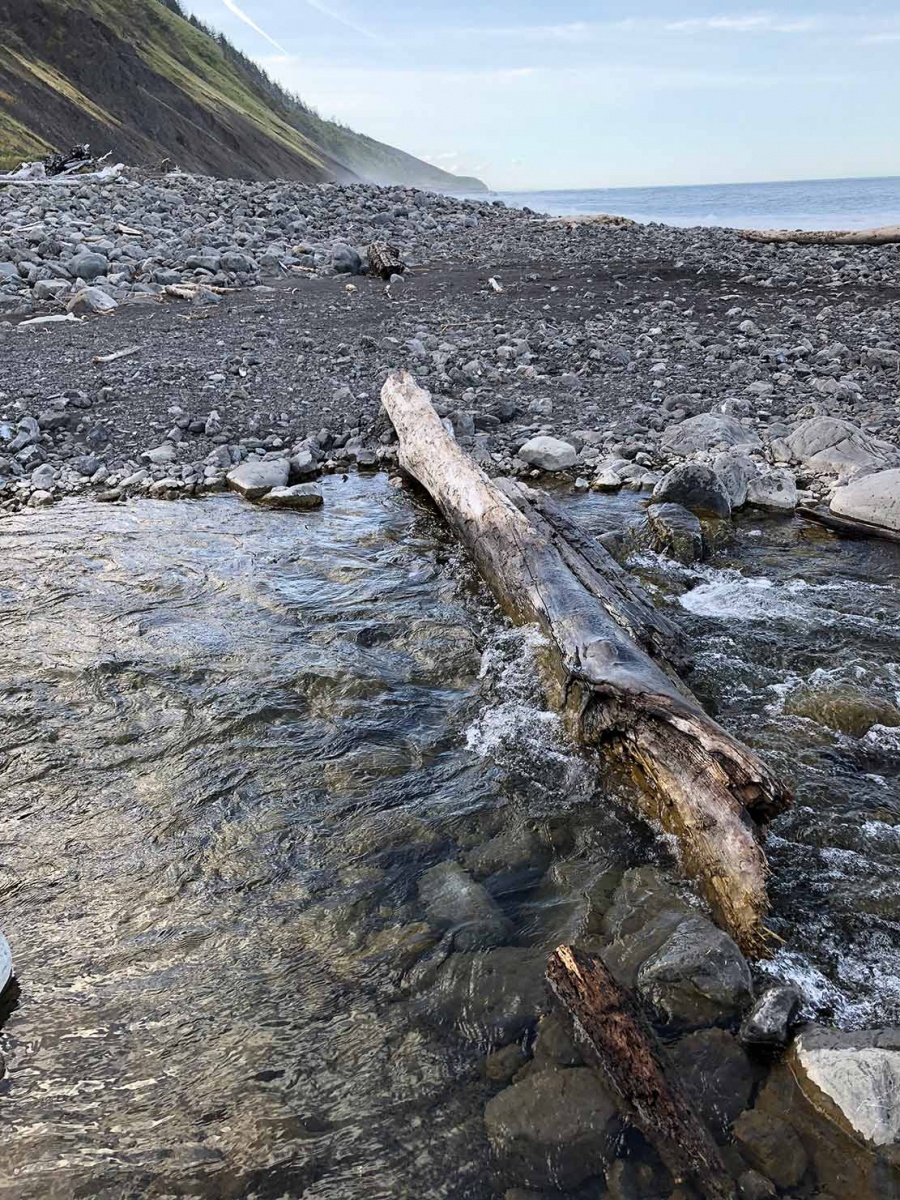

At end of trip. Note driftwood trekking poles.
Set out at 8 AM after breakfast of granola with hot water and my last hard-boiled egg. Had to cross creek and I wasn’t about to try balancing on slippery log with heavy pack.
My technique: take off shoes, tie laces together, hang around neck, go barefoot across creek with my 2 bespoke driftwood hiking poles, v. carefully; slipping would be a disaster. Got across, dried feet, rebooted, was on my way.
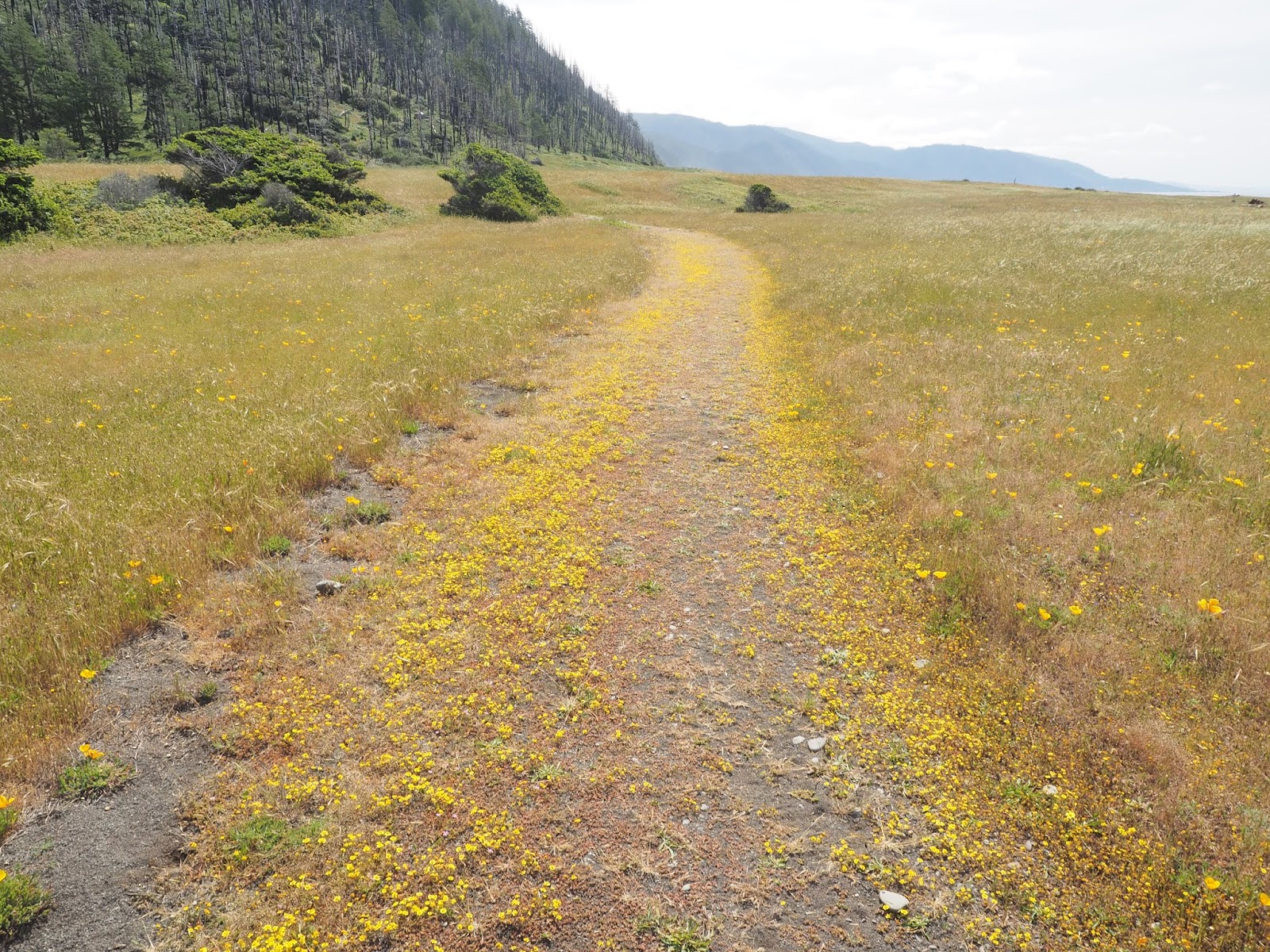
Felt great — it was lucky that the fast-moving hiker the night before had told me how to get up on bluff trail; otherwise would not have seen it and struggled through beach boulders and deep sand.
Whoo! Walking on a trail was a cinch, and this one was lined with flowers. Fortified with almonds, chocolate, and 14-grams-of-protein Power Bar, numerous water stops, I made it through the 2nd high tide zone.
What I learned to do was rest before flat-lining. I stopped for 15 or so minutes, 4-5 times, resting near a creek and once, lying in the shade in a driftwood shack, to regain strength and then pushed on. I ended up walking for 8½ hours until pretty near exhausted, reached Shelter Cove around 5 PM.

Photo: Bruce Winckler
The rooftop shakes were sourced locally on the island and were steamed to achieve the curves. This cottage is featured in our latest book, Small Homes.

 Lloyd House built this in 1972. His condition for taking the job was that the owners could only visit the job site three times during construction.
Send us material (photos and text) for The Shelter Blog.


