https://youtube.com/watch?v=wuvrAUFYi1Q
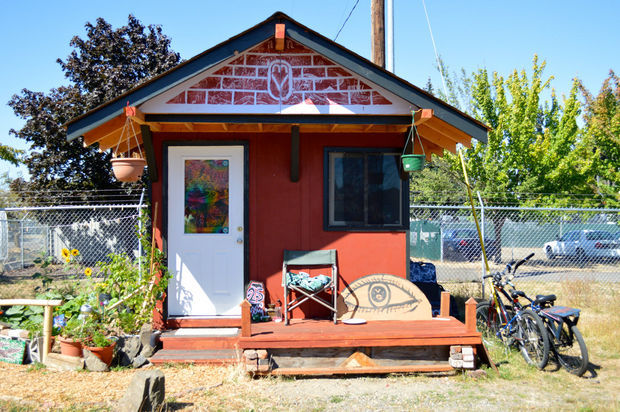
Madison’s newest and smallest neighborhood makes its debut. Tiny House Village on East Johnson Street is a project to offer shelter to some of Madison’s homeless population. Occupy Madison created it three years ago with a goal of helping the homeless get back on their feet.
[sharethis]
In Eugene, the Whoville tent camp has returned, this time to city-owned land next to a downtown street.
Eugene urban planner Andrew Heben has an alternative idea to tents: tiny houses.
The author of Tent City Urbanism: From Self-Organized Camps to Tiny House Villages (The Village Collaborative, $18) co-founded the nonprofit organization Opportunity Village Eugene, which last year created a community where people live in 30 tiny houses.
There is no electricity or plumbing, but the front doors can be locked for privacy and the modular, simple structures keep the rain, wind and chill away. A tenant can personalize the 80-square-feet space. Many have sleeping lofts over the kitchen/desk area. A few have painted the plywood walls.
Residents share a communal kitchen, bathrooms, showers and gathering space.
www.oregonlive.com/hg/index.ssf/2014/11/tiny_houses_for_homeless.html
[sharethis]
“Take a 1901 barn, a 1923 farmhouse, and a student who needs an architectural project and you get the opportunity to own a unique two-piece tiny house. Come up with $23,000 and a way to move the project from its home in Olympia and you support a student with ideas while also being green and eco. At 256 square feet, the price per square foot isn’t too bad, either. There must be a catch.
Some assembly required. The house is a student project, an incomplete student project. The most important parts are finished, or at least enough of the exterior has been completed to protect the building and the interior. As for the interior, the hardwood floor, bathroom sink, and “other bits” are in; but you may want to check on the kitchen, the rest of the bathroom, any cabinetry, lighting, plumbing, heating, etc. Details, details…”
seattle.curbed.com/…
Listing here
[sharethis]
 Unique, off-grid, tiny home located on a 46-acre agro-forestry farm. Each beautiful, one-room cabin has a wood stove, built-in double bed, writing desk and personal kitchen within its small footprint. Although tiny, each cabin is self-contained and has sufficient storage. The kitchen is equipped with a propane stove-top, open shelving and a counter-top water dispenser.
skagit.craigslist.org/…
[sharethis]
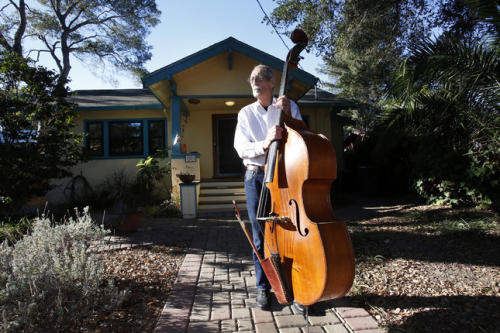
“Two years of tight supply and intense demand have pushed prices for modest Bay Area homes in trendy neighborhoods to mind-boggling heights. In Palo Alto, tiny homes sell for multiple millions of dollars. In Oakland’s sought-after Rockridge district, a home just sold for $500,000 over the asking price. With the price of homes in Palo Alto skyrocketing, Ken Plourde, a 79-year-old retired jazz bass player, decided it was time to sell the home he bought for $35,000 in 1970. “I was sitting on a gold mine,” said Plourde, whose income from music gigs has been declining with his advancing years and changes in the live music business.”
www.insidebayarea.com/…
[sharethis]
 “Sean Spain is selling a house for $10,500, about the price of a used car with a sleepable back seat. Granted, the house is 100 square feet. But the home is a charming little rebuttal to America’s obsession with big living. The average home square footage in the U.S. continues to climb — 1,525 square feet in 1973 to 2,598 last year — while an underground trend toward “micro” living has emerged…”
Article at www.usatoday.com
[sharethis]
 Deek is the artist/author of Humble Homes, Simple Shacks, Cozy Cottages, Ramshackle Retreats, Funky Forts: And Whatever the Heck Else We Could Squeeze In Here, prolific designer, builder, video maker, media prankster, musician, and has been featured in our books Tiny Homes as well as Tiny Homes on the Move.
relaxshacks.blogspot.com
[sharethis]
They printed 8 photos from the book in conjunction with Lloyd’s appearance in Vancouver this Monday night (www.vpl.ca/calendar/index.php/calendar/progid/48441).
www.vancouversun.com/travel/…
[sharethis]
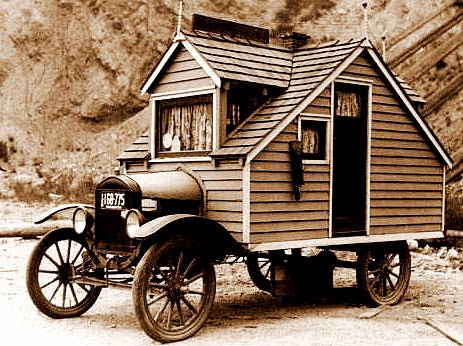
“As a continuation of Tiny Homes: Simple Shelter, author Lloyd Kahn (former Shelter editor of Whole Earth Catalog) brings us Tiny Homes on the Move, which showcases 90 nomadic homes made from trailers, school buses, vans, trucks, boats, and even a tricycle. Each entry includes an essay by or about the home’s creator, who talks about why and how they converted a vehicle into a house. Each dweller has a unique story…”
The Tiny Homes on the Move book got a pretty nice review over at BoingBoing.
[sharethis]
 “When I was a kid I had a little workbench with holes in it, and the holes were square or round or triangular. And you had to pick the right little piece of wood block and hammer it in with a little wooden hammer. And so I’d hammer with it, put the round dowel into the round hole, and hammer it through. And then maybe the most formative thing was when I was twelve — I helped my dad build a house. It had a concrete slab floor, and concrete block walls. And my job was shoveling sand and gravel and cement into the concrete mixer for quite a while. We’d go up there and work on weekends. One day we got the walls all finished, and we were putting a roof on the carport, and I got to go up on the roof. They gave me a canvas carpenter’s belt, a hammer and nails, and I got to nail down the 1″ sheeting. And I still remember that, kneeling on the roof nailing, the smell of wood on a sunny day. And then I worked as a carpenter when I was in college, on the docks. I just always loved doing stuff with my hands…”
Check out the article over at Medium.
[sharethis]
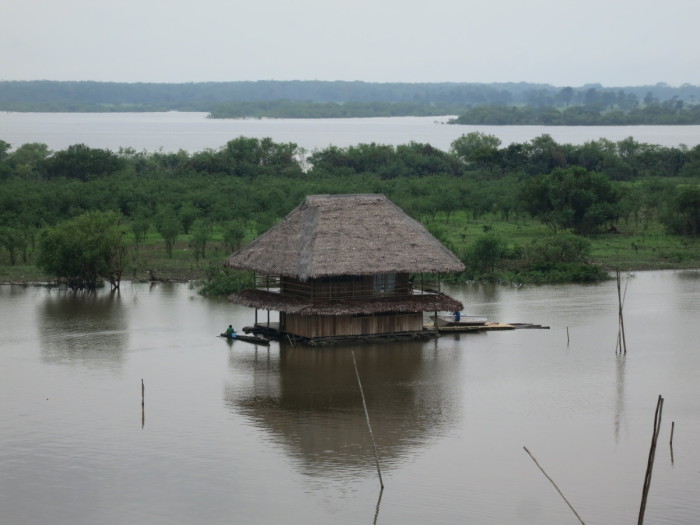
Floating home on the Amazon
I recently got home from a two-week trip to Peru with my wife Chelsea. We flew into Lima and hung there for a day. From there we flew to Cusco for two days then took a train to Aguas Calientes where we stayed for three nights and visited Machu Picchu. We then went back to Cusco for a night and then onto Iquitos which sits directly on the Amazon, Iquitos is the largest city in the world not reachable by a car. Everything must come in by boat or plane, we stayed at an eco lodge for three nights. One of the best parts of the trip was seeing all of the different building techniques which are employed from the Andes to the Amazon. Hope you enjoy.


[sharethis]